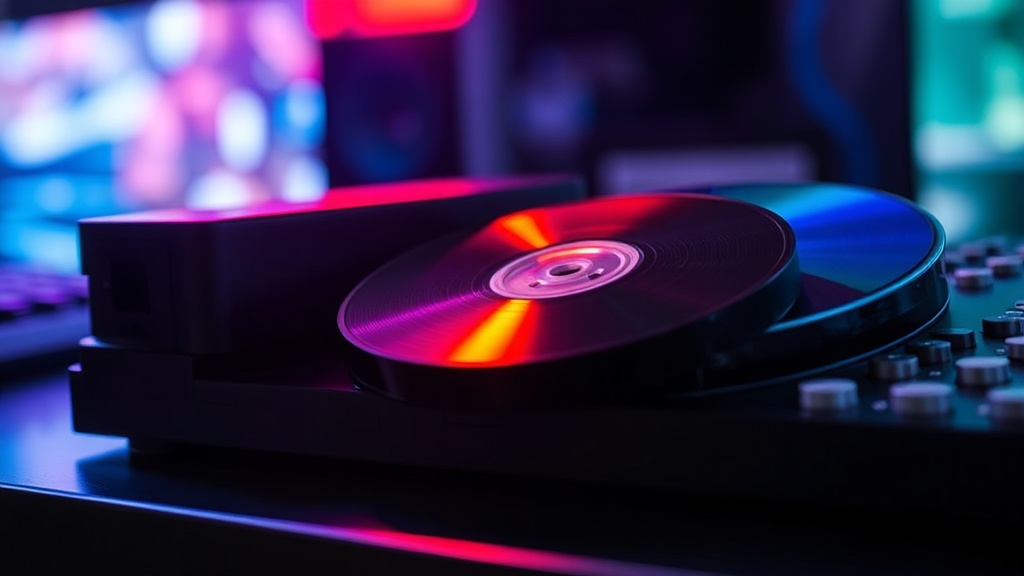
Why Physical Media Still Outperforms Streaming in Quality

A single high-quality 4K Blu-ray disc can carry a bitrate nearly five times higher than the most popular streaming platforms available today. While most people assume that a high-speed internet connection provides a seamless viewing experience, the reality of data compression often tells a different story. When you watch a movie on a streaming service, you aren't seeing the full-resolution image the director intended; you're seeing a highly compressed version of it. This distinction matters because it affects how much detail reaches your eyes and how much way is lost in the transition from the studio to your living room.
The shift toward digital distribution happened faster than many expected. We've become accustomed to the convenience of clicking a play button, but that convenience comes with a hidden cost: loss of fidelity. This isn't just about a slight blur in dark scenes; it's about the fundamental structure of the image and the audio that accompanies it. If you're a cinephile, you know that the difference between a heavily compressed stream and a high-bitrate disc is night and day.
Does streaming quality actually affect my viewing experience?
It absolutely does. When a streaming service compresses a file to ensure it plays without buffering, it often sacrifices the fine details in shadows and highlights. This is where "banding" occurs—those ugly, visible lines in a gradient, like a sunset or a dark sky. A physical disc holds much more data, allowing for smoother transitions and deeper blacks. If you've ever noticed a grainy, blocky mess in a dark scene on a popular platform, you've witnessed the limits of streaming compression.
Audio is another area where the gap is massive. Most streaming services use lossy audio formats to save bandwidth. While they might label something as "Surround Sound," it rarely matches the bit-depth of a physical disc. A high-end Blu-ray offers uncompressed audio tracks like DTS-HD Master Audio or Dolby TrueHD. These tracks provide the dynamic range needed to feel the impact of a sudden explosion or the subtle whisper of a character's voice. For those with a dedicated home theater setup, streaming audio often feels thin and hollow by comparison.
Why do physical discs have better colors and contrast?
The answer lies in the bitrate. Think of bitrate as the amount of information flowing through the connection every second. Streaming services have to manage millions of users simultaneously, so they squeeze the data down to keep the pipe from clogging. This results in a loss of color accuracy and high-frequency detail. A physical disc, however, provides a massive, consistent stream of data that doesn't rely on your ISP's current traffic levels.
When you watch a film on a physical medium, you are seeing a version of the film that is closer to the master file used in the editing room. The color grading—the way colors are balanced to evoke specific emotions—is much more stable on a disc. On a stream, you might see color shifting or "crushed" blacks where details simply disappear into a black void. For those who care about color accuracy, the choice is clear.
Is it worth buying physical movies in the digital age?
If you value ownership and quality, the answer is a resounding yes. When you "buy" a movie on a streaming platform, you're essentially renting access to a license that can be revoked at any time. A physical disc is something you actually own. It lives on your shelf, not in a cloud-based library that might disappear due to a licensing dispute between a studio and a provider.
Beyond that, physical media provides a consistent experience. You don't have to worry about your internet connection dropping or your resolution downscaling from 4K to 1080p because someone else in your house started a large download. For collectors, there is also the tactile satisfaction of the artwork, the special features, and the ability to preserve a piece of cinema history. You can check the technical specifications of various releases on sites like Blu-ray.com to see exactly what you're getting before you spend your money.
There is also the issue of longevity. Digital formats change, and streaming libraries are constantly being shuffled. A well-maintained collection of physical media remains a stable library of your favorite stories. If you want to see the true intent of a cinematographer, you have to go to the source. The IMDb database often lists technical specs for films, and you'll notice that the most prestigious releases often highlight their high-bitrate audio and video formats for a reason.
We are currently in a strange era where digital convenience is the norm, but physical quality is the gold standard. While streaming is great for a quick watch on a phone or a tablet, it fails to meet the requirements of a true cinematic experience. If you want to see the textures of a costume, the glint in an actor's eye, or the subtle grain of a film stock, you need to look toward the physical shelf. It's a small investment for a much more profound connection to the art form.