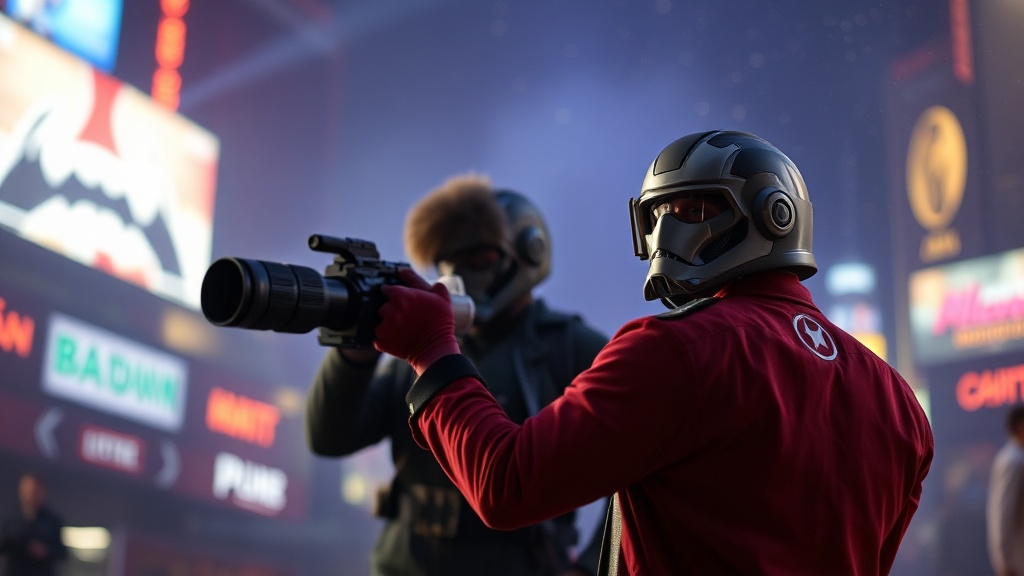
Why Does Every Modern Blockbuster Feel the Same?

The Visual Fatigue of the Modern Spectacle
Imagine sitting in a darkened theater, waiting for the lights to dim. The trailers finish, the studio logo fades, and then—it happens. A massive, CGI-heavy sequence unfolds. The colors are bright, the action is fast, and the scale is gargantuan. But as the credits roll, you realize you can't quite remember a single unique moment from the last two hours. You've seen this exact explosion, this specific shade of blue, and this exact pacing a dozen times before. This isn't just a feeling; it's a byproduct of how movies are actually made today.
The shift from practical effects to digital environments has changed more than just the budget; it has changed the very DNA of visual storytelling. When a director can conjure a dragon or a collapsing skyscraper with a keystroke, the friction of reality disappears. That friction—the physical weight of an object or the way light hits a real piece of wood—is often what makes a scene feel grounded. Without it, we enter a state of sensory overload where nothing feels particularly heavy or important.
A major factor in this phenomenon is the rise of the "tentpole" strategy. Studios are increasingly betting on established intellectual property (IP) rather than original concepts. This leads to a feedback loop where successful visual templates are recycled. If a certain shade of orange works for a desert fight in one movie, the algorithm (or the studio executive) suggests it for the next. We aren't just watching movies; we're watching optimized versions of previous successes.
Is CGI Killing Cinematic Originality?
The debate over Computer Generated Imagery (CGI) often misses the point. It isn't that CGI is "bad," but rather that it is often used as a shortcut to bypass the hard work of physical world-building. When a production relies too heavily on a green screen, the actors are often reacting to nothing—a void of empty space. This lack of physical stimulus can lead to performances that feel detached or hollow.
Consider the difference between a practical explosion and a digital one. A real explosion has dust, debris, and unpredictable physics. A digital explosion follows a set of programmed rules. While modern software like Autodesk Maya allows for incredible detail, the predictability of digital assets can strip away the sense of danger. If the audience knows the hero is safe because the "threat" is just a collection of pixels, the tension evaporates.
Many filmmakers are pushing back against this trend. Directors like Christopher Nolan or Denis Villeneuve often emphasize practical sets or in-camera effects to maintain a sense of tactile reality. They understand that even if you use digital tools, the foundation must be something the human eye recognizes as "true." This tension between the digital and the physical is where the most interesting modern cinema lives.
Why Do All Action Movies Have the Same Pacing?
If you look at the editing rhythm of most high-budget action films, you'll notice a pattern. It's a rapid-fire sequence of short cuts—sometimes less than a second long—designed to keep the heart rate up. This is often referred to as "kinetic editing." While it's meant to simulate excitement, it frequently results in a blur of motion that leaves the viewer feeling exhausted rather than engaged.
This style of editing is a response to shorter attention spans, but it often sacrifices the ability to build suspense. True suspense requires a slow build—a moment where the camera lingers on a character's hesitation or a ticking clock. When every frame is an explosion or a quick-cut punch, there is no room for the quiet moments that make the big moments land. We lose the ability to breathe, and eventually, we stop caring about the stakes.
- The Rapid-Cut Fatigue: Too many cuts can make a scene hard to follow, especially in complex fight choreography.
- The Lack of Spatial Awareness: Fast editing often makes it difficult to understand where characters are in relation to each other.
- The Loss of Tension: By skipping the buildup, the emotional payoff is significantly diminished.
To see how much impact editing has on our perception of time and space, one can look at the deep archives of IMDb, where the technical credits of various eras show a clear shift in how much time is spent on single-shot sequences versus rapid-fire cuts.
How Can We Support More Original Filmmaking?
If we want to see a departure from these tired tropes, the shift has to start with the audience. The current economic model of Hollywood favors the "safe bet." An original, mid-budget drama is a risk; a superhero sequel is a predictable revenue stream. This creates a cycle where novelty is punished by the box office in favor of the familiar.
However, the rise of streaming and independent film platforms has provided a loophole. We are seeing a resurgence of genre-bending stories that don't follow the standard blockbuster blueprint. By seeking out films that prioritize practical effects, unique visual styles, and non-linear-narrative structures, we signal to the industry that there is a market for more than just the same old spectacle. The goal isn't to reject the digital age, but to demand that it serves the story, rather than the other way around.
The Impact of Visual Tropes
A visual trope is a recurring image or style that becomes a shorthand for a genre. In modern blockbusters, we see the "teal and orange" color grading everywhere. This is because teal and orange are complementary colors that make human skin tones pop. It works, but it also makes every movie look like it belongs to the same family. When everything is optimized for maximum visual "pop," the soul of the film often gets lost in the saturation.
The next time you're in a theater, try to watch for these patterns. Notice when a camera movement feels unearned or when a color palette feels recycled. Being a more observant viewer is the first step toward demanding more from the stories we consume. The magic isn't in the pixels; it's in the way those pixels are used to tell a human story.