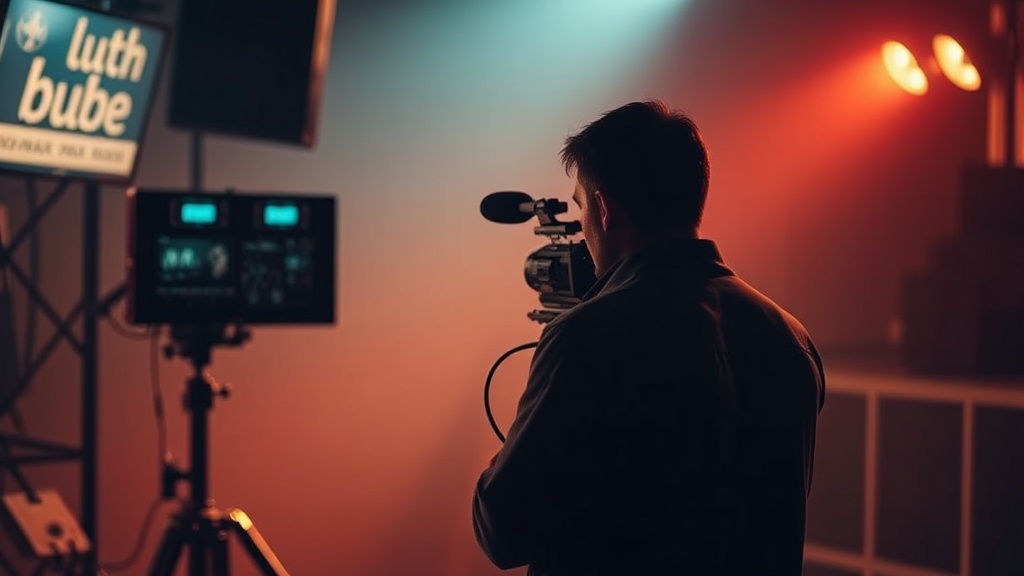
What Does a Film Editor Actually Do? The Craft of Shaping Cinematic Storytelling
This guide explains exactly what film editors do during post-production—how they transform hundreds of hours of raw footage into a cohesive, emotionally resonant story. You'll learn the technical skills required, the creative decisions editors make, and why this role is often called "the invisible art" of filmmaking. Whether you're curious about film careers or simply want to appreciate movies differently, this breakdown covers everything from basic cutting techniques to the psychology of pacing.
What Skills Does a Film Editor Need?
Film editing isn't just about knowing software—though proficiency in tools like Adobe Premiere Pro, Avid Media Composer, or DaVinci Resolve is non-negotiable. The best editors possess a rare combination of technical precision and storytelling intuition. They need to understand rhythm (the flow between shots), timing (when to cut for maximum impact), and continuity (maintaining logical consistency across scenes shot out of order).
Patience ranks high on the list. An editor might spend eight hours perfecting a thirty-second sequence. They also need thick skin—directors and producers will request changes, sometimes reversing work that took days to complete. Communication skills matter too. Editors must articulate why a particular cut works while remaining open to collaboration. They're not solitary technicians; they're creative partners who shape the director's vision into its final form.
Perhaps most importantly, editors need emotional intelligence. They cut performances, deciding which take captures the right nuance—a slightly longer pause, a more genuine smile, a tear that forms at exactly the right moment. These micro-decisions accumulate, transforming good scenes into unforgettable ones.
How Does an Editor Transform Raw Footage Into a Story?
The editing process begins with organization—ingesting footage, syncing audio, logging takes. This groundwork might consume weeks before any "creative" cutting happens. Once organized, editors assemble what's called an "assembly cut"—a rough version of the film in chronological order. It's long, often painful to watch, and resembles the finished product only vaguely.
From there, editors refine through successive passes. The "rough cut" establishes basic structure and pacing. The "fine cut" polishes timing and performance. Along the way, editors make thousands of micro-decisions: Should this shot last two frames longer? Does this reaction belong before or after the line that triggers it? Is this entire subplot necessary, or does it kill momentum?
Editors also manipulate time in ways viewers rarely notice. They might stretch a moment through slow-motion or cross-cutting between simultaneous events to build tension. The Academy of Motion Picture Arts and Sciences recognizes editing as distinct from directing precisely because these temporal manipulations fundamentally alter how audiences experience narrative.
Sound design integration happens simultaneously. Temporary music tracks guide emotional beats. Sound effects suggest cuts that don't exist visually. Editors often say they cut "with their ears" as much as their eyes—bad audio makes any visual cut feel wrong, while the right soundscape can sell even awkward transitions.
What Are the Different Types of Editing Techniques?
Continuity editing dominates mainstream cinema—it's the invisible style that keeps viewers immersed without noticing the cuts. Techniques like the 180-degree rule (maintaining consistent screen direction), match cuts (aligning visual elements across shots), and eyeline matches (showing what a character sees) create spatial logic that feels natural.
Montage editing takes the opposite approach, embracing visible cuts for emotional or intellectual effect. Think of the training sequences in Rocky or the baptism scene in The Godfather—these rapid progressions compress time and build meaning through juxtaposition rather than continuity.
Cross-cutting (or parallel editing) alternates between separate locations, suggesting simultaneous action. Filmsite.org traces this technique back to D.W. Griffith's The Birth of a Nation (1915) and its famous last-minute rescue sequences. Modern thrillers rely heavily on this technique—imagine The Dark Knight without its intercutting between Harvey Dent's press conference and the Joker's hospital explosion.
Other techniques include the L-cut (where audio from one scene carries over into the next shot) and the J-cut (where upcoming audio precedes its visual). These overlapping transitions smooth narrative flow, guiding viewers unconsciously from moment to moment.
How Do Editors Work With Directors and Studios?
The editor-director relationship varies wildly. Some directors shoot with editing in mind, providing limited coverage (shot variety) and specific instructions. Others—particularly those who "write in the edit"—shoot extensively and rely on editors to discover the film during post-production.
Studio involvement complicates matters. Test screenings generate notes. Studio executives demand changes. Sometimes editors must defend the director's vision; other times they must execute compromises that preserve the film's core while satisfying commercial concerns. The infamous "director's cut" phenomenon often stems from editors preserving alternative versions during this tug-of-war.
Television editing adds network and showrunner pressures into the mix. Episode lengths must hit exact timestamps. Act breaks require cliffhangers. Streaming has loosened some constraints—no commercial breaks means different pacing—but created new ones, like designing episodes that work both individually and as binge-watched sequences.
Why Is Editing Called the Invisible Art?
When editing works perfectly, viewers don't notice it at all. They're simply absorbed in the story. That's the paradox: excellence in editing manifests as absence. Bad editing announces itself through jarring cuts, continuity errors, or pacing that feels too fast or too slow. Good editing feels inevitable—like the film couldn't exist any other way.
This invisibility makes editing particularly undervalued outside industry circles. The Motion Picture Editors Guild frequently advocates for greater recognition, noting that editing nominations often predict Best Picture winners (though correlation isn't causation, the overlap suggests how fundamental editing is to overall film quality).
Editors themselves embrace this anonymity. Many describe their role as being "the first audience"—the person who experiences the film fresh and shapes it for everyone who follows. They don't need credit sequences to know their work matters. Every gasp, laugh, or tear an audience produces was cut into existence by human hands making deliberate choices.
Next time you watch a film, try counting the cuts in a single scene. Most viewers register only a fraction of them. That's not accident—that's thousands of hours of invisible craft, hiding in plain sight.