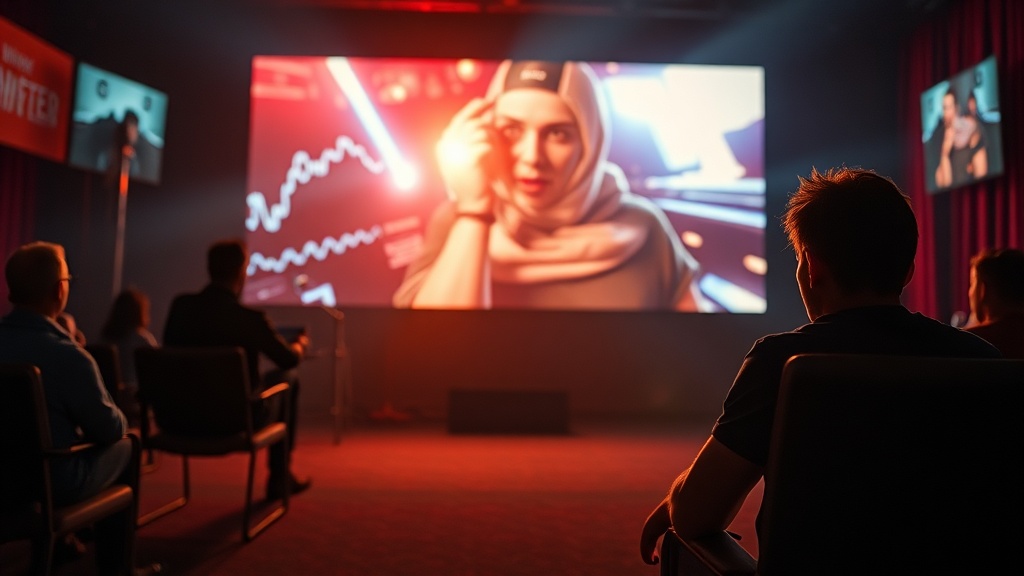
Master the Rule of Thirds: improve Your Movie Watching Experience

Quick Tip
The rule of thirds places key visual elements along imaginary grid lines to create balanced, engaging compositions that draw the viewer's eye naturally.
Understanding the rule of thirds transforms passive viewing into active appreciation. This quick guide breaks down how cinematographers use this fundamental composition technique to guide your eyes, build tension, and tell stories visually — and why recognizing it makes every movie more engaging, from blockbuster action sequences to intimate character studies.
What is the rule of thirds in filmmaking?
The rule of thirds divides every frame into nine equal sections using two horizontal and two vertical lines. Cinematographers position key subjects along these lines or at their intersections — called "power points" — rather than dead center. (Think of it like a tic-tac-toe grid overlaid on your screen.) This technique dates back to painting traditions but became a film staple through classic Hollywood cinematography. When you watch Mad Max: Fury Road, notice how often vehicles sit on the lower third line while the sky dominates the upper two-thirds — that's intentional visual weight distribution. Even animated films like Spider-Man: Into the Spider-Verse use this grid to keep chaotic action readable.
Why do cinematographers use the rule of thirds?
Off-center composition creates visual interest and natural eye movement. When characters occupy the left or right third, negative space opens up for context — a looming threat, a distant destination, or emotional isolation. Roger Ebert often noted how this technique directs attention without viewers consciously noticing. The method also helps filmmakers maintain continuity during dialogue scenes. By keeping speakers on opposite sides of the frame, editors cut between shots without disorienting the audience. That said, breaking this rule carries meaning too — centering a character often signals vulnerability or confrontation. Great directors understand when to follow the grid and when to abandon it.
How can you spot the rule of thirds in popular films?
Look for horizon placement and subject positioning. In The Revenant, Emmanuel Lubezki frequently aligns the treeline with the upper third, creating atmospheric depth while grounding Leonardo DiCaprio's character in the lower frame. Here's a quick breakdown of common applications:
| Scene Type | Typical Placement | Example Film |
|---|---|---|
| space shots | Horizon on upper or lower third line | The Lord of the Rings |
| Dialogue scenes | Characters on opposite vertical thirds | The Social Network |
| Suspense moments | Subject on far left or right third | No Country for Old Men |
| Close-ups | Eyes aligned with upper horizontal line | Citizen Kane |
Worth noting: modern filmmakers sometimes abandon this grid entirely. Film Inquiry highlights how movies like The Grand Budapest Hotel use symmetrical centering for stylistic effect. The catch? You need to understand the rule before you can appreciate when directors break it deliberately. Wes Anderson's centered compositions work because they contrast against decades of off-center framing.
Streaming platforms like Criterion Channel offer pristine versions of classic films where these techniques shine. Next time you watch, pause on a striking shot — mentally draw those grid lines. You'll start seeing the invisible architecture that shapes every frame. Some smartphones even overlay grid lines on photos; try watching movies through that lens. That's the real movie magic.