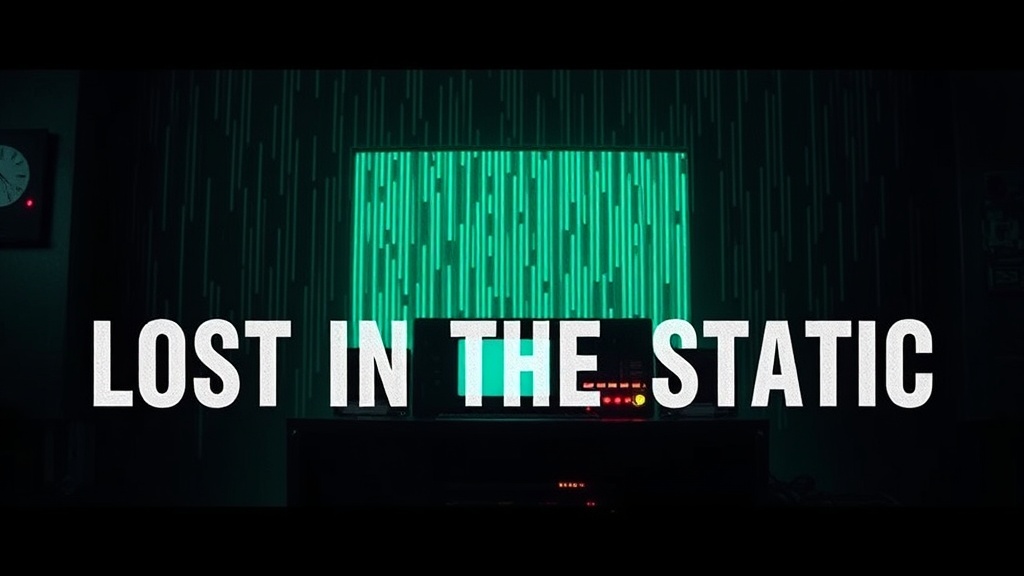
Lost in the Static: The Vanishing Era of Analog Horror

A flickering CRT television sits in a dark living room, emitting a low-frequency hum that feels heavy in the air. The screen shows nothing but static—white noise and jagged lines—until a distorted, low-resolution image of a smiling face briefly cuts through the grain. It’s a moment of profound discomfort, a feeling that the medium itself is broken or, worse, possessed. This is the essence of analog horror: a genre built on the fear of the obsolete, the distorted, and the uncanny-valley sensations found in decaying media.
This post examines the rise and current state of the analog horror genre, looking at how creators use low-fidelity aesthetics to trigger primal fears. We'll look at the technical hallmarks of the genre, the psychological triggers used by creators, and why the era of "found footage" is shifting as digital technology catches up.
What Defines the Analog Horror Aesthetic?
Analog horror is defined by its use of low-fidelity visual artifacts, such as tracking errors, color bleeding, and heavy film grain, to create an atmosphere of dread. It relies on the idea that the viewer is watching something they weren't meant to see—a lost VHS tape, a corrupted emergency broadcast, or a damaged training video.
The genre doesn't just want to scare you with jump scares. It wants to unsettle you with what is *missing* or what is barely visible. Think about the way a grainy, low-resolution image can make a human face look slightly "off." That slight distortion—a mouth too wide, eyes a bit too dark—is where the horror lives. It’s a way of weaponizing the limitations of old technology.
Creators often use specific tools to achieve this look. You won't see the crisp, high-bitrate perfection of a modern 4K stream here. Instead, you see the grit of:
- VHS Tracking Errors: Those horizontal lines that jitter across the screen.
- Chromatic Aberration: The way colors bleed at the edges of objects.
- Low Frame Rates: A stuttering motion that makes movement feel unnatural.
- Audio Degradation: Distorted, muffled, or high-pitched frequencies that signal something is wrong.
If you want to understand how visual language shapes our perception of reality, check out my previous piece on the nuances of cinematography. Understanding how a frame is constructed is vital to seeing how horror creators manipulate your eyes.
It's not just about being "old." It's about the specific way old technology fails. A digital glitch looks like a computer error; an analog glitch looks like a physical decay of information. That distinction is everything.
Why Is Analog Horror So Popular Right Now?
The popularity of analog horror stems from a collective sense of nostalgia blended with a deep-seated fear of the unknown lurking within familiar, outdated formats. It taps into "liminal spaces"—places or things that feel eerie because they are empty or out of context.
We see this in massive hits like The Mandela Catalogue or Local 58. These series don't rely on expensive CGI. They rely on the psychological weight of a grainy broadcast. There is a certain comfort in the familiarity of a 1980s-style public service announcement, which makes the sudden intrusion of something monstrous feel much more violating. It’s the contrast between the mundane and the macabre.
The barrier to entry is also incredibly low. You don't need a Hollywood budget to make something terrifying. You need a good understanding of how to manipulate a video file and a knack for psychological pacing. This has allowed a new wave of independent creators to bypass traditional studios and find massive audiences on YouTube and TikTok.
The psychological hook is simple: the Uncanny Valley. When something looks almost human, but not quite, our brains trigger a biological "error" response. In a high-definition world, we are used to seeing everything clearly. Analog horror pulls the rug out from under us by hiding the truth in the static.
How Do Creators Simulate Old Media Effectively?
Creators simulate old media by layering digital artifacts, such as scan lines, tape hiss, and color desaturation, over modern footage. The goal is to make the viewer forget they are looking at a high-definition computer screen and convince them they are looking at a piece of physical, decaying history.
The process usually involves a "de-grading" workflow. You start with a clean shot and then systematically strip away the quality. This is a fascinating reversal of the modern trend where everyone is trying to make things look better. Here is a common breakdown of how the "look" is achieved:
| Effect Type | Visual Result | Psychological Impact |
|---|---|---|
| VHS Distortion | Horizontal jitter and color bleeding. | Creates a sense of instability and unreliability. |
| Low Bitrate Audio | Muffled voices and heavy background hiss. | Increases tension and makes the viewer lean in. |
| Static/Noise | Grainy, non-uniform textures. | Obscures the subject, making the brain fill in the gaps. |
| Color Desaturation | Muted, washed-out color palettes. | Evokes a sense of the past or a dying reality. |
Many creators use software like Adobe Premiere Pro or even specialized mobile apps to add these layers. However, the best ones understand that it isn't just about adding a "grain filter." It’s about the timing. It’s about the moment the audio cuts out right before something happens. It's about the silence.
This brings up an interesting point about our current era of media. We live in a time where we are obsessed with clarity. We want 4K, 8K, and perfect-fidelity sound. But as I've discussed elsewhere, the push for high-definition perfection can sometimes strip away the soul of the viewing experience. Analog horror thrives in the gaps that high-definition tries to close.
Is the Era of Analog Horror Fading?
The era of analog horror isn't necessarily ending, but it is evolving into more sophisticated, specialized sub-genres that move beyond simple VHS aesthetics. We are seeing a transition from "found footage" to "found media" that spans various eras of technology.
The "VHS-only" phase might be peaking, but the core concept—the fear of a corrupted medium—is still very much alive. We are seeing creators move into the world of early internet horror, "dreamcore," and even the uncanny aesthetics of early 2000s digital webcams. The medium is changing, but the dread remains the same.
The danger for the genre is the "meme-ification" of its tropes. When a certain type of jump scare or a specific distorted face becomes a recognizable meme, the horror dies. It becomes a cliché. Once the audience can predict the "glitch," the tension evaporates. To stay relevant, creators have to find new ways to unsettle us—perhaps by looking at the glitches in modern, high-tech interfaces rather than just old tapes.
The technical side of this is also moving. As more people become aware of how to fake these effects, the "authentic" feeling of the genre becomes harder to maintain. It’s a constant battle between the desire for realism and the ease of digital manipulation. If everyone can make a "scary" VHS tape in five minutes, the genre risks becoming white noise itself.
The fascination with the past is a powerful tool. As long as there are old, discarded technologies sitting in basements and attic corners, there will be creators looking to breathe a terrifying life back into them. The static might be fading, but the things hiding within it are still very much present.